Behind the image: arctic fox
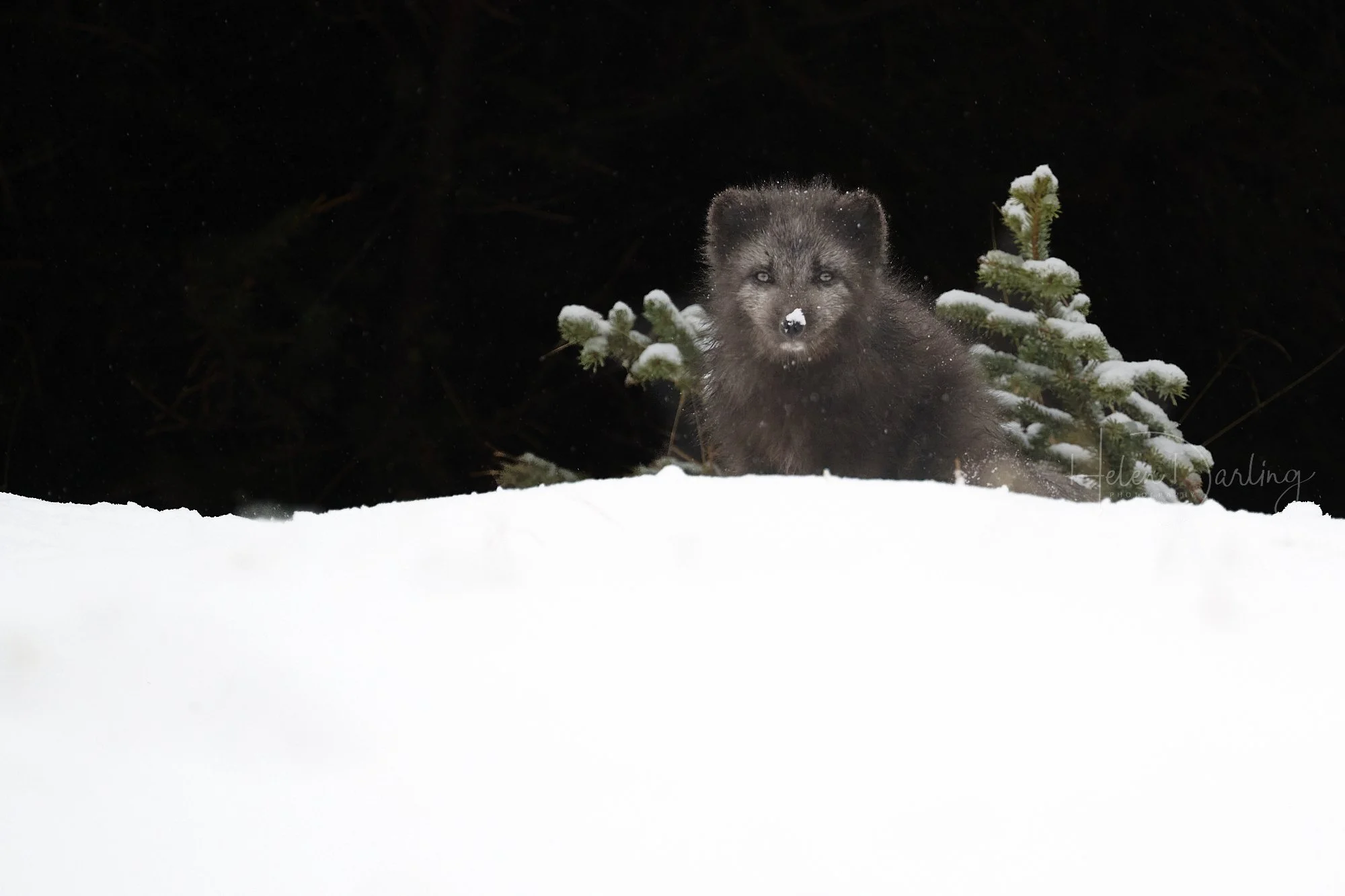
Arctic fox, Iceland
A fox had been spotted by the cluster of low growing trees about fifty metres from where we were staying. Blizzard like conditions, ice, snow, and heavy camera gear making the short trek more difficult. Both wind and snow were going to make the photography challenging.
One of the photographers was already in situ, lying on the snow bank, occasionally peaking over the crest of the hill - slow and deliberate movements to avoid frightening the little animal. That’s the thing about professional photographers: there is a consideration for others and an avoidance of thinking that photography is a competitive pursuit.
For over an hour I lay in the snow watching the animal. For quite some time it curled into a tight ball, its tail acting as a barrier to the intense cold. Finally I got the shot I wanted - it looking directly at me (or through me!), but as is often the case, you only ‘feel’ that you have the shot as the conditions didn’t allow review of images in the field, in fact at times it was hard to see and I wished I had the snow goggles of my companion. It was only when back inside, fire on and photographs downloaded that I appreciated the image.
The arctic fox is Iceland’s only native mammal, a small carnivorous animal that only grows to around 3-5 kg, about the weight of a domestic cat. There is nothing domestic about these incredibly well-adapted animals who can survive temperatures of up to -5O degrees before showing discomfort. Their short snout and ears are adapted for hunting in snowy conditions and their paws contain a sort of heat-exchange unit to prevent the pads from freezing.
I had travelled to Hornstrandir Nature Reserve in the West Fiords of Iceland (arguably just about as far away from Stewart Island, New Zealand that you can get) specifically to photograph foxes. Arriving into Reykjavik a couple of days before travelling to the West Fiord allowed a little bit of recovery, a good chance to wander the streets (and discover the best pistachio pinwheels I had ever eaten) before a flight from the domestic airport up to Isafjordur where I overnighted before meeting the rest of the photography group. A boat trip took us from Isafjordur up to Kviar. There is no wharf or jetty so we were loaded into a zodiac (along with our gear) and were taken ashore.
A few things to be aware of:
International flights arrive into Keflavik, there is a transfer bus which takes you into the bus station, from there mini-buses deliver you around town - although these do not necessarily stop at your accommodation
Domestic flights to Isafjordur leave from Rekjavik airport which is very close to the town
There was some discussion that the airport at Isafjordur may be decommissioned meaning that travellers would need to travel via road (and there is limited public transport)
The best time to see Arctic Foxes is in winter - travel plans need to incorporate the risk of weather disruptions.
There is very limited shopping in Rekjavik so make sure you take all of your camera gear that you will need.
Would I do it again? 8/10
Do I recommend it? 9/10
Best bits? A true off-grid experience, no wifi, no cell coverage just a group of enthusiastic photographers a warm house and photography opportunities.
I travelled independently with Borea Adventures but I would love to travel with Phil Garcia, an arctic fox expert who takes a very ethical approach to wildlife photography.
Final advice: if you are planning on going on a tour ask if they bait the animals - if they do, don’t go. Baiting (feeding) wild animals has a number of implications including dependency on humans, potential for spread of disease, and fostering ‘nuisance’ behaviours.
My next adventure: big bears and a small boat
