Behind the image: kiwi
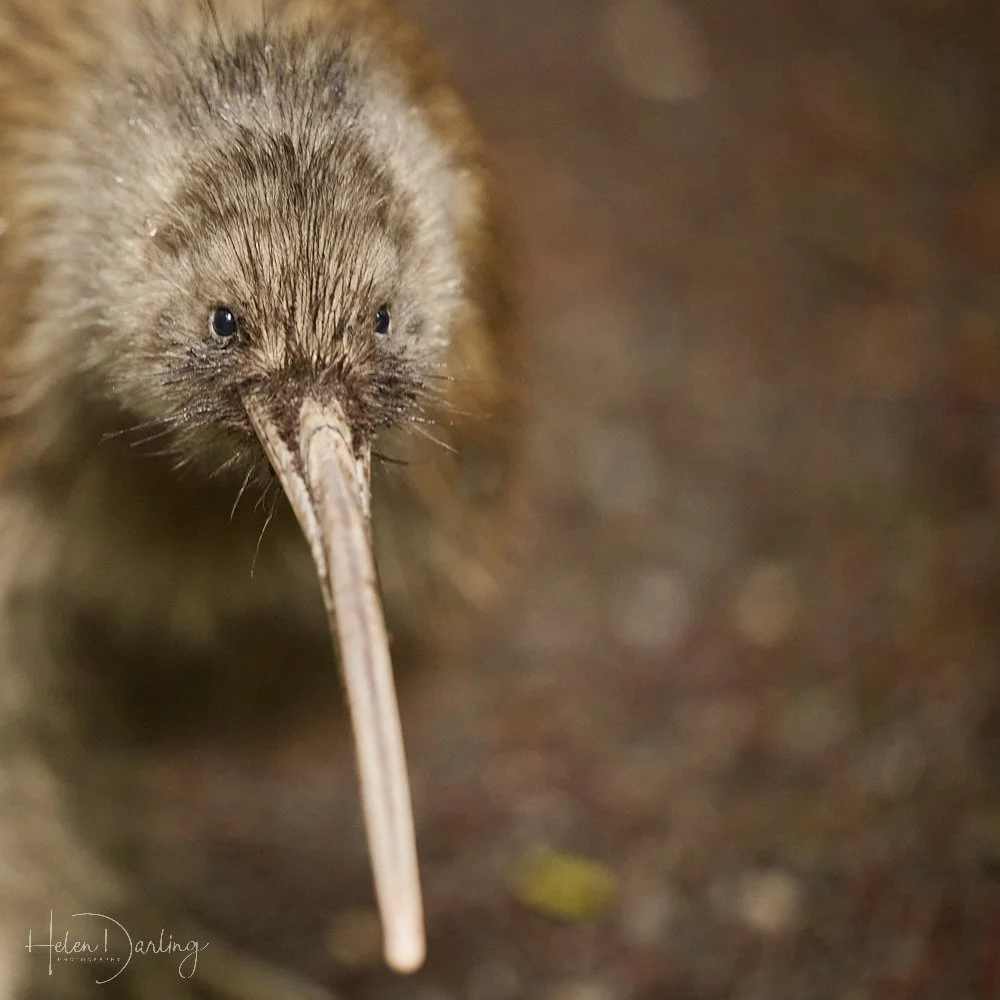
Tokoeka | Brown Kiwi, Ulva Island
What do you do in your downtime if you live on a small island? Go to an even smaller island.
Ulva Island is a 5-7 minute water taxi from Stewart Island; most often the water taxi leaves from Golden Bay an invigorating walk from Oban (the town centre). I had a day off and so heading over to the island for an early morning wander.
After a few minutes of fast travel across Paterson Inlet time slows as you walk from the jetty into the forest. At the top of the first rise, water taxi still in sight, you can often see tieke - saddleback. Making my way along the formed path I had only just entered the ancient forest when I heard the sound of a male kiwi calling in the distance. Walking slowly, until the sound became much louder and the male was joined by a female, I waited on the track. That’s the thing about New Zealand birds - if you are quiet and still they will often come towards you.
My lens was too long. I usually use either a 70-200mm or 600mm lens in the forest, crouched on the path I was delighted when the bird pushed out of the crown fern and made its way directly towards me. Within seconds it was too close for my lens and camera. The bird came within about a metre of me - watching it purposefully stride towards me (if you ever see a kiwi you will know what I mean) before looking at me and then heading back into the ferns.
Seeing a kiwi in the wild, day or night, on Rakiura Stewart Island is not guaranteed but it is one of the few places in the country where you stand a good chance. I have been to Ulva several times and have only encountered them twice. There are a number of operators on the island that can take you on kiwi spotting (night) tours and I do recommend going with a guide for the first time on Ulva.
Stewart Island Kiwi - Tokoeka are a distinct subspecies and are unusual for being active throughout the daytime, they also differ by living in family groups with offspring sticking around for a few years to help incubation by sitting on eggs. Fun fact: their nostrils are at the end of their long beak which technically means they have a very short beak (scientifically beaks are measured from the tip of the beak to the nostrils).
A few things to be aware of:
While you can see kiwi in the daytime they are generally in a dark forest, a good low light lens is your friend.
Quiet and slow movements - whatever camera you have to hand will be the one you use. There is often no opportunity for a bag unpack and lens change. Kiwi encounters tend to be brief.
Photographing kiwi at night is difficult - they don’t stand still. Do NOT use a flash and consider taking a phone video as you keepsake
Book a water taxi ahead of time and allow yourself plenty of time to wander. If you go with an organized tour you will not need to book a water taxi
Be considerate. If you see other people slowing down or stopping in the forest don’t rush past them - it is likely that they have spotted something that you will want to see too.
Use your ears. Every time I have seen a kiwi in the daytime I have heard it first - rustling of ferns or calling out. Go slowly and go quietly.
Be patient.
Would I do it again? 10/10
Do I recommend it? 10/10
Best bits? Being in the forest is good for the soul - whether or not you see a tokoeka.
Final advice: be prepared for changeable weather - often the bird life is more ‘accessible’ on grey and rainy days as the birds tend to come down from the canopy. That being said… kiwi are always on the ground.
My next adventure: arctic foxes
